
Our approach
What actually happens in a Montessori classroom
If you have only ever seen a conventional classroom, the first ten minutes of a Montessori morning are disorienting. Nobody is at the front. Everyone is busy. Here is why.
The Montessori method was developed by Dr. Maria Montessori, an Italian physician, from close scientific observation of how children actually behave when they are given the freedom to. It has been in use for more than a century, across every continent, in every kind of school.
Its central claim is unfashionable and, once you have watched it, hard to argue with: a child is naturally hungry for knowledge and entirely capable of directing their own learning, provided the environment around them has been thoughtfully prepared. The adult’s job is not to fill the child up. It is to prepare the room, give the lesson, and then get out of the way.
The greatest sign of success for a teacher is to be able to say, “the children are now working as if I did not exist.” Dr. Maria Montessori
Six principles
What makes it work
A three-hour, uninterrupted work period
No bell every forty minutes. Children need a long runway to reach real concentration, and the single most destructive thing an adult can do is interrupt a child who has found it.
The child chooses the work
Once a lesson has been given, the material goes on the shelf and the child decides when to return to it, and how many times. Choice is what turns compliance into interest.
Mixed ages in one room
A three-year span in every classroom. Younger children learn by watching; older ones consolidate by teaching. It is the engine of the whole thing, and it is why we do not stream by birthday.
The materials correct the child, not the teacher
The pieces only fit one way; the water only reaches the line. A child discovers the error themselves rather than being told, which keeps the adult out of the role of judge.
The teacher observes first
A Montessori teacher spends much of the morning watching, deciding which child is ready for which lesson. Directing traffic from the front of the room is not the job.
The prepared environment does the teaching
Everything at child height, everything with a place, everything real and breakable. The room is designed so a young child can be genuinely independent inside it.
The five areas
What is on the shelves, and why
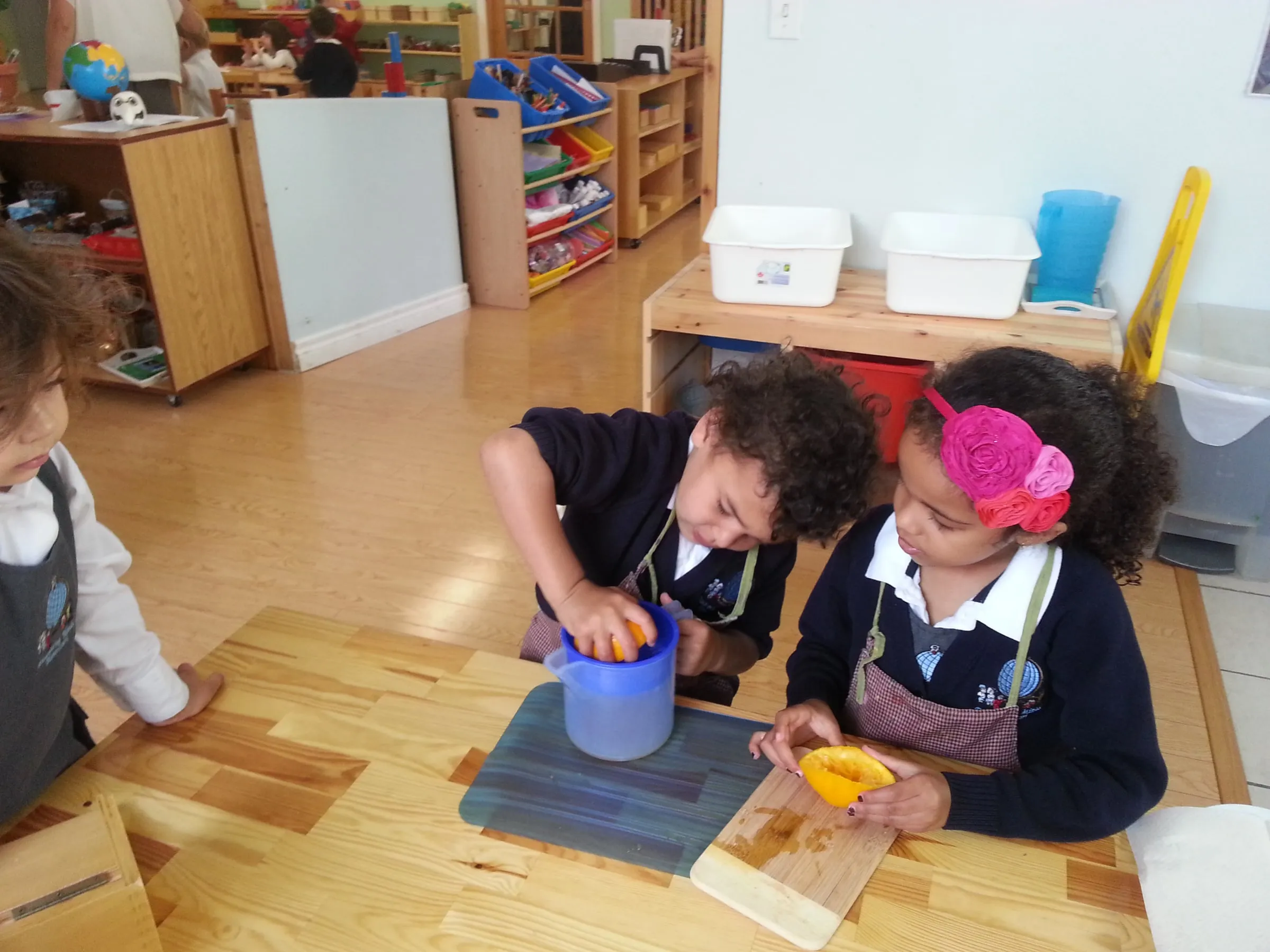
Practical Life
Pouring, sweeping, buttoning, polishing, squeezing oranges, laying a table. To an adult this looks like housework. To a two-year-old it is the most serious work in the room, and it builds the coordination, sequencing and concentration that everything else depends on.
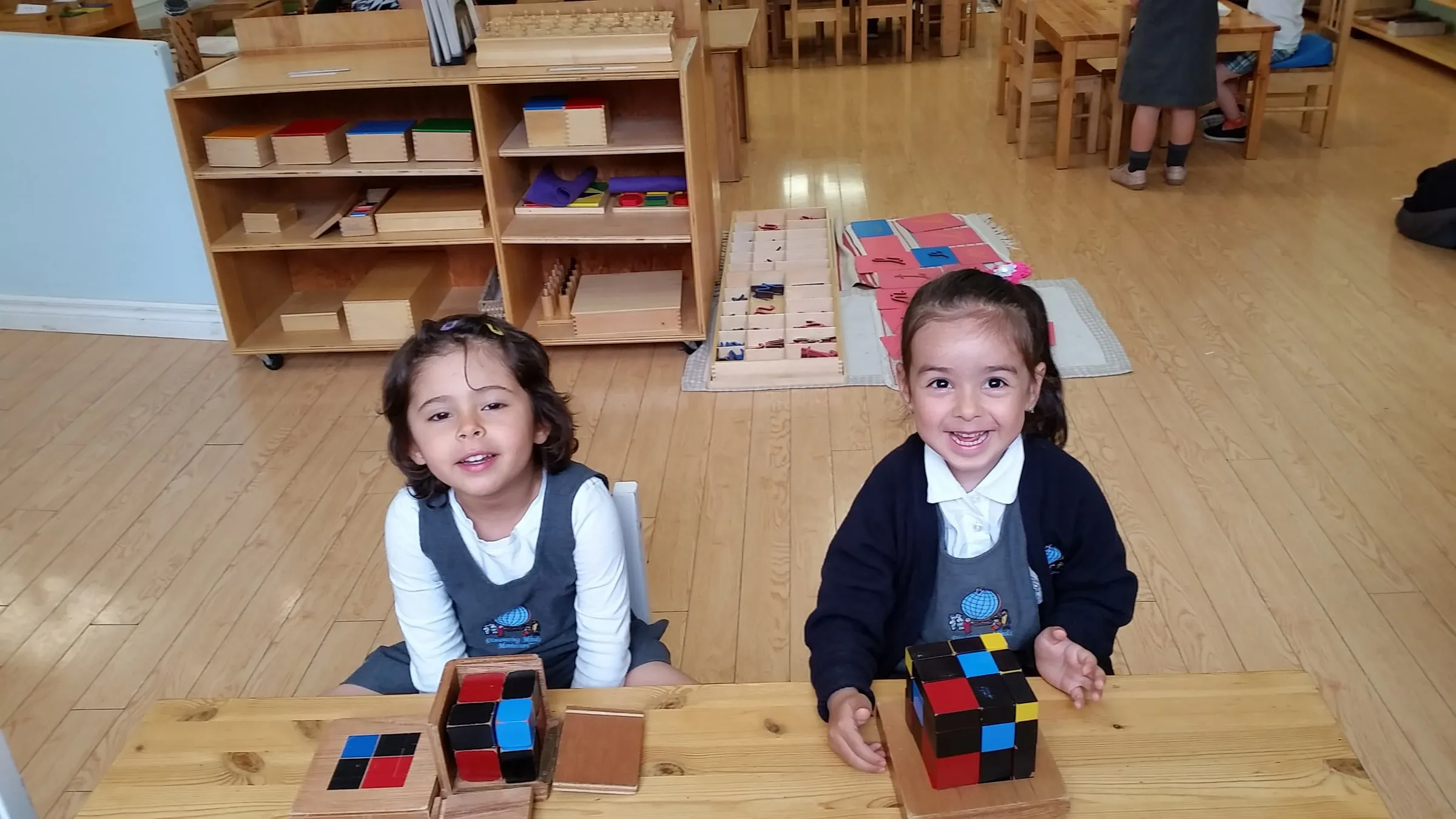
Sensorial
Materials that isolate one quality at a time — size, colour, weight, sound, texture, dimension — so a child can sort and grade the flood of impressions the world sends them. The order this creates in a young mind is the scaffolding for later mathematics.
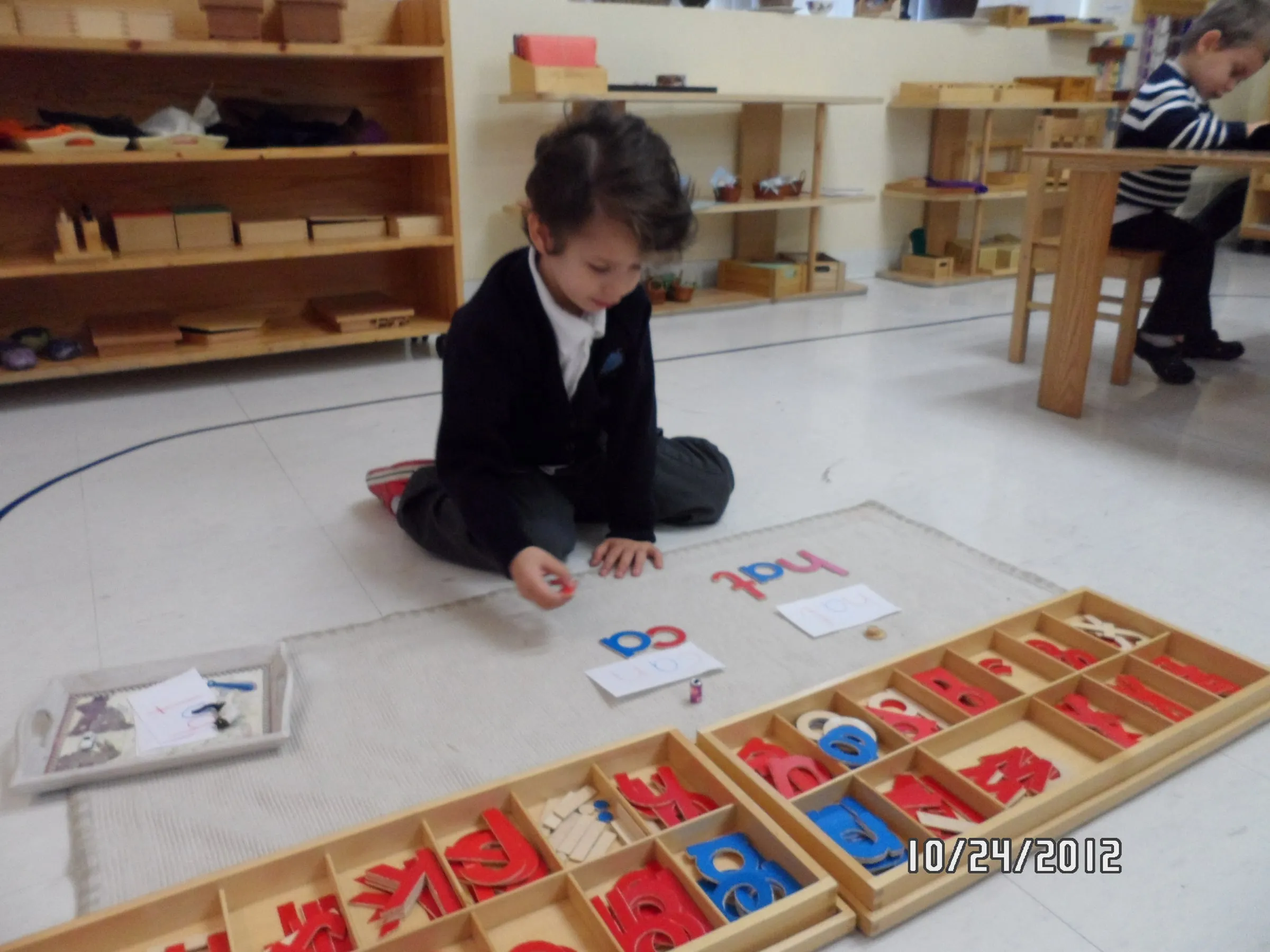
Language
Sound games before letters, sandpaper letters before pencils, and the movable alphabet before handwriting — so children build words with their hands long before their fingers can form them. Writing tends to arrive before reading, and then reading arrives all at once.
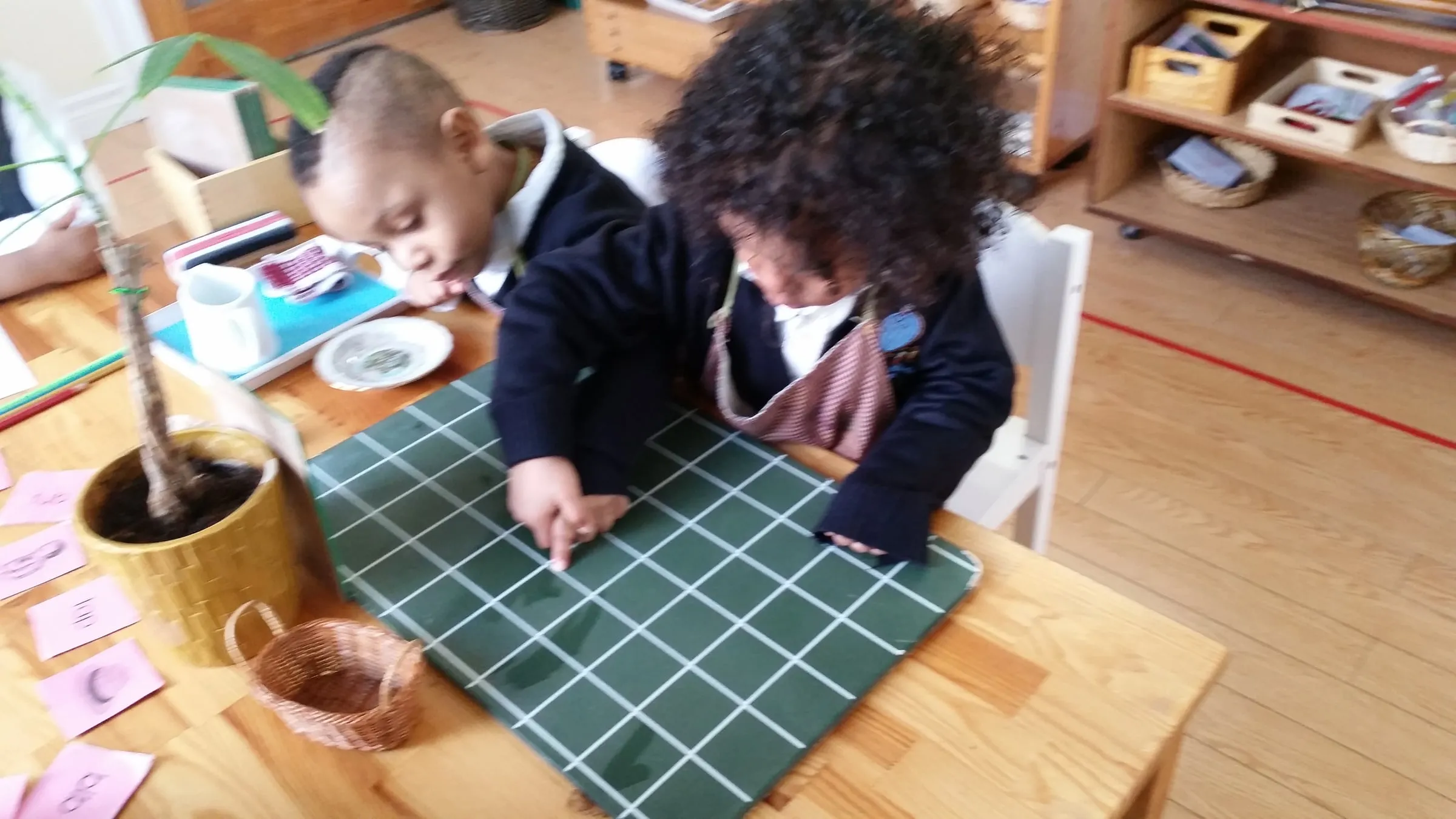
Mathematics
Every abstraction is met first as a physical thing. A thousand is a cube you can barely lift; a unit is a single bead. Children carry out four-digit addition and division with the golden beads years before they would be asked to do it on paper.
Culture & Science
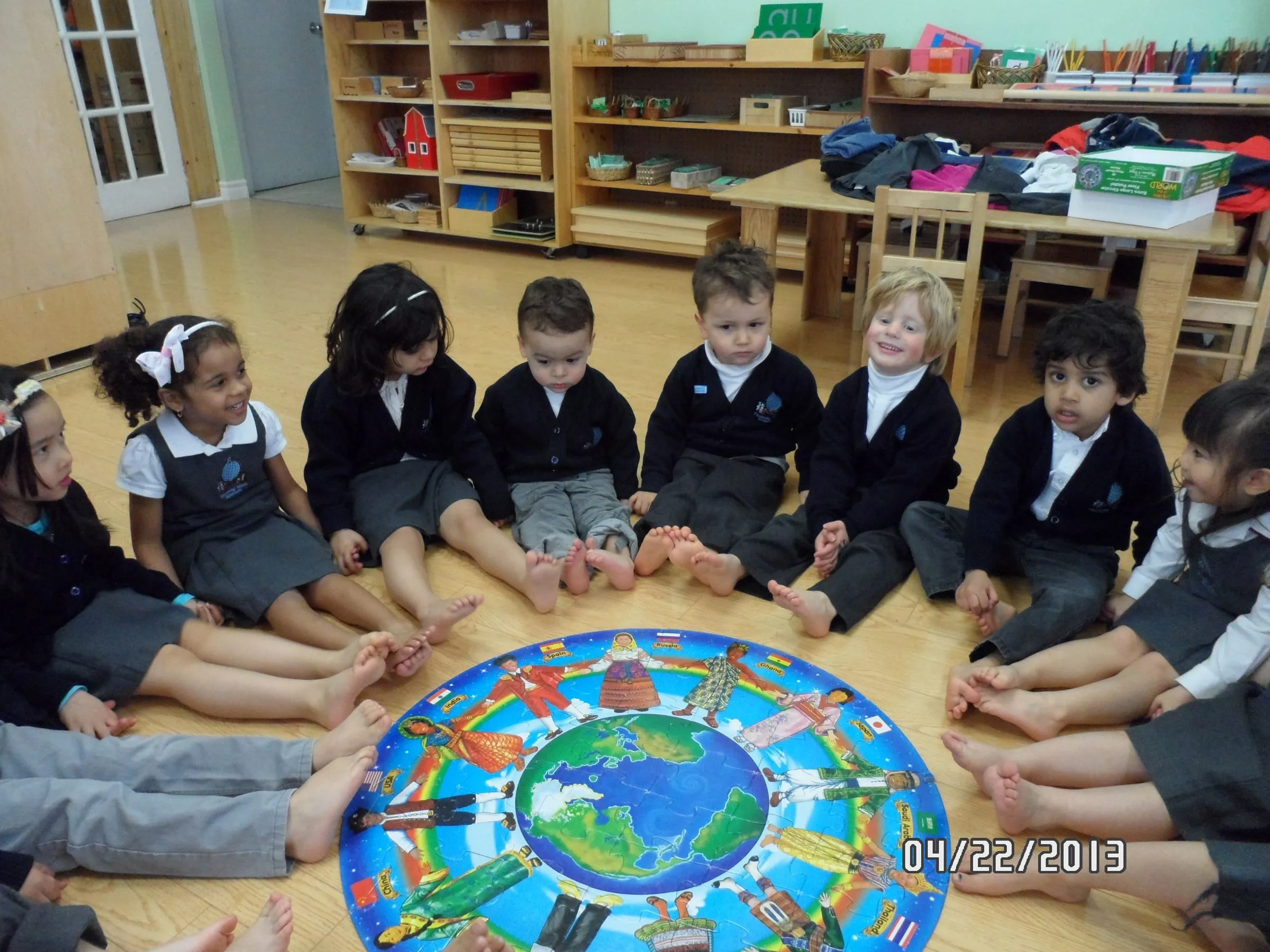
Continents, land and water forms, botany, zoology, timelines and experiment. The world is presented whole and then explored in pieces — which is also why the globe is on our badge.
Read next
Why we ask families to plan on three years
The single most important thing to understand before enrolling anywhere Montessori — and the reason a child who leaves after two years has done the work without collecting the payoff.
The three-year cycleOr see it in practice
A day at Discovering Minds
The schedule from 7:30 in the morning to 5:00 at night — arrival, the work period, lunch, outdoor time, languages and home.
The daily rhythmBe first through the door
We are moving to one new downtown location for the 2026-27 school year. Call us or send a note now and you will be among the first families offered a tour when the doors open.