
English
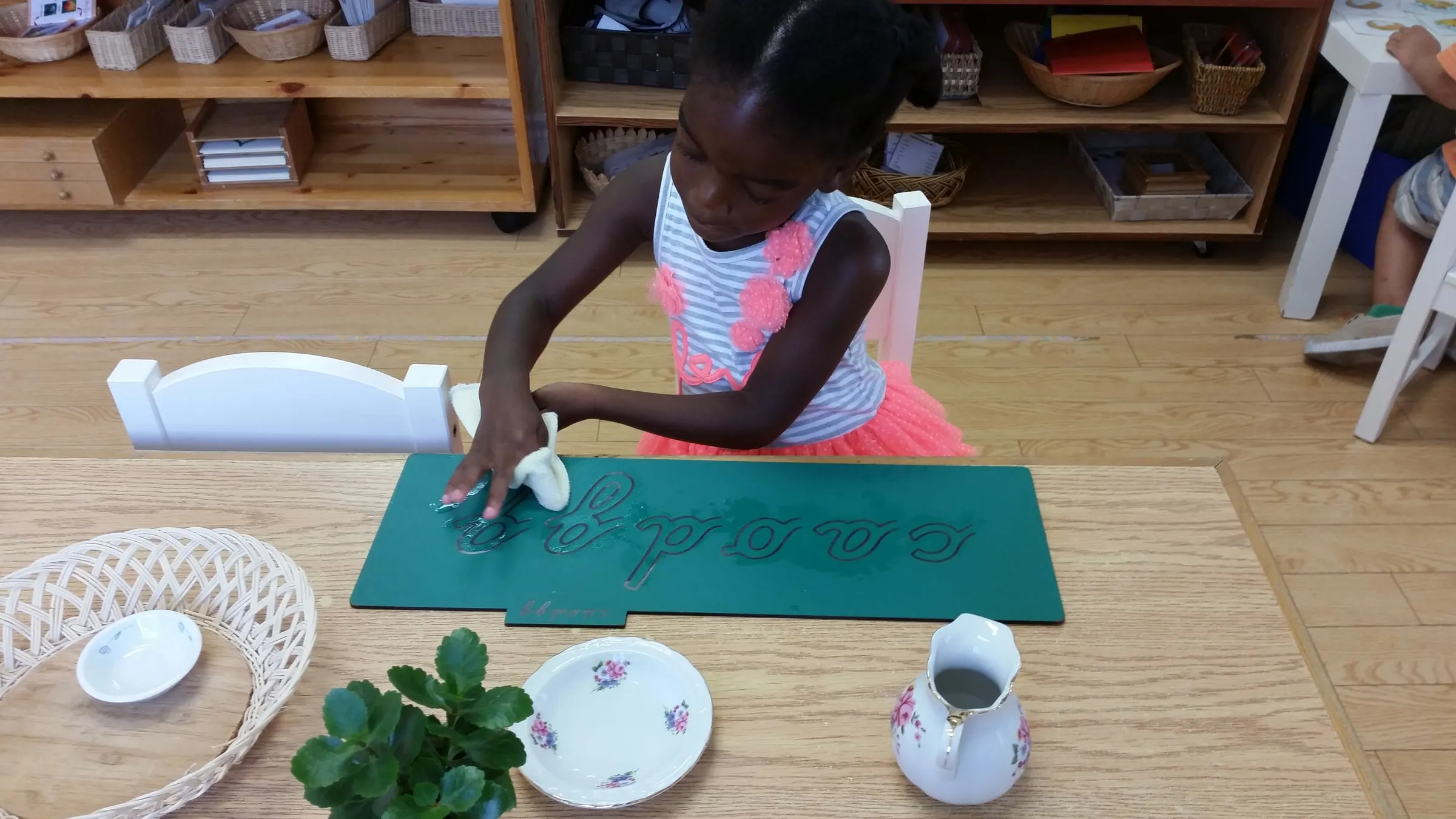
Language of instructionEnglish is the primary language of instruction and of the Montessori reading and writing sequence: sound games, sandpaper letters, the movable alphabet, phonograms, and on into grammar and sentence analysis.
Languages
English, French and Spanish — taught by teachers who speak them, to children young enough to absorb them without effort. It is the thing families most often come to us for.
English is the primary language of instruction and of the Montessori reading and writing sequence: sound games, sandpaper letters, the movable alphabet, phonograms, and on into grammar and sentence analysis.
French immersion has been part of this school since it opened, and it is the language we are best known for. Children meet it in the afternoon work period, in songs and greetings, in the routine of lunch and tidying, and in the Montessori language materials themselves.
Spanish is the one almost nobody else in downtown Toronto offers at this age. It is not a novelty here — it is spoken natively by members of the school, and it is taught as a working language rather than a cultural garnish.
When it happens
The morning belongs to the three-hour Montessori work period, which we protect fiercely. The languages live mainly in the afternoon block, from about 1:30, once the children are back in from outdoor time.
But that undersells it. Language at this age is not a timetabled subject so much as an atmosphere. Greetings at the door, counting the places at lunch, naming what is on the shelf, the songs at tidy-up time — a great deal of the French and Spanish a child picks up here arrives sideways, during the parts of the day that are not labelled "language".
Older children in Lower Elementary do more formal work: vocabulary, structure, reading and writing in both languages alongside their English grammar and composition.
Why so early
Between birth and about six, a child absorbs the sound system of any language they are immersed in, without effort and without an accent. That capacity fades. A three-year-old is not learning French the way an adult learns French — they are simply acquiring it.
The method already works through repetition, through materials a child returns to again and again, and through a teacher who speaks quietly to one child at a time. That is close to ideal conditions for picking up a second and third language.
There is no separate French club at extra cost on Thursdays. The languages are inside the ordinary school day, taught by teachers who speak them, and included in tuition.
Families who intend to move into a French immersion elementary stream in the Toronto public system find their child arrives with a substantial head start in listening and speaking.
“Learning the correct answers will get a child through school, but learning how to learn is a preparation for life.” Dr. Maria Montessori
When our new building opens, come in during a working morning and listen. You will hear all three languages inside ten minutes, which is a better answer than anything we can write here. Ask now and we will save you an early slot.